



Who Do We Help?
Every child dreams of a safe home…
We support children and young people at risk of social exclusion who are facing difficult life circumstances. We surround them with daily care and thoughtful support so they can grow and develop in peace. We help them on their path to independence by creating a safe place for them.
There are children who fall asleep at night to the sound of arguments. Children who worry about their younger siblings instead of a math test. Children who prefer to stay longer at school or on the street rather than return to a home where no one is waiting for them.
In Poland, over 77,000 children grow up outside their biological families, and nearly 1,500 are waiting for a place in foster care or a children’s home. Parents often struggle with illness, addiction, loneliness, or a lack of support. And although they love their children, they are not always able to provide what children need most: presence, care, and attentiveness.
Modern childhood is not safe
Childhood should be a time of joy, development, and discovering the world. For thousands of children in Poland, however, everyday life looks very different—it is marked by anxiety and loneliness, violence and neglect, lack of understanding, and emotional emptiness.
According to data from the Empowering Children Foundation from 2023:
- 79% of children in Poland have experienced violence or neglect,
- 32% experienced violence from a close adult,
- 52% experienced violence or neglect in just the last year alone.
Added to this are the effects of intergenerational trauma, poverty, single parenthood, mental illness, and a lack of emotional competencies, which burden entire families. Children often function in environments where they:
- are or have been witnesses to and victims of violence,
- lack stable routines, predictability, and emotional support,
- take on caregiving roles for siblings or adults from a very young age,
- live in chronic stress.
In many cases, these are children from families where parents themselves never had the chance to learn what a healthy relationship and safe parenting look like.
Where do we work?
We run Homes for children and young people and operate in areas particularly affected by social crisis.
- Warsaw – Praga-Południe (Kamionek and Grochów)
These areas are identified in Warsaw’s revitalization program as crisis zones, with a concentration of issues such as unemployment, addiction, crime, and a lack of systemic support. - Kamionka – Lublin Voivodeship
Although the scale of the problems is different, children face similar challenges: limited access to developmental activities, transport exclusion, poverty, and loneliness


Our Homes are more than after-school centers
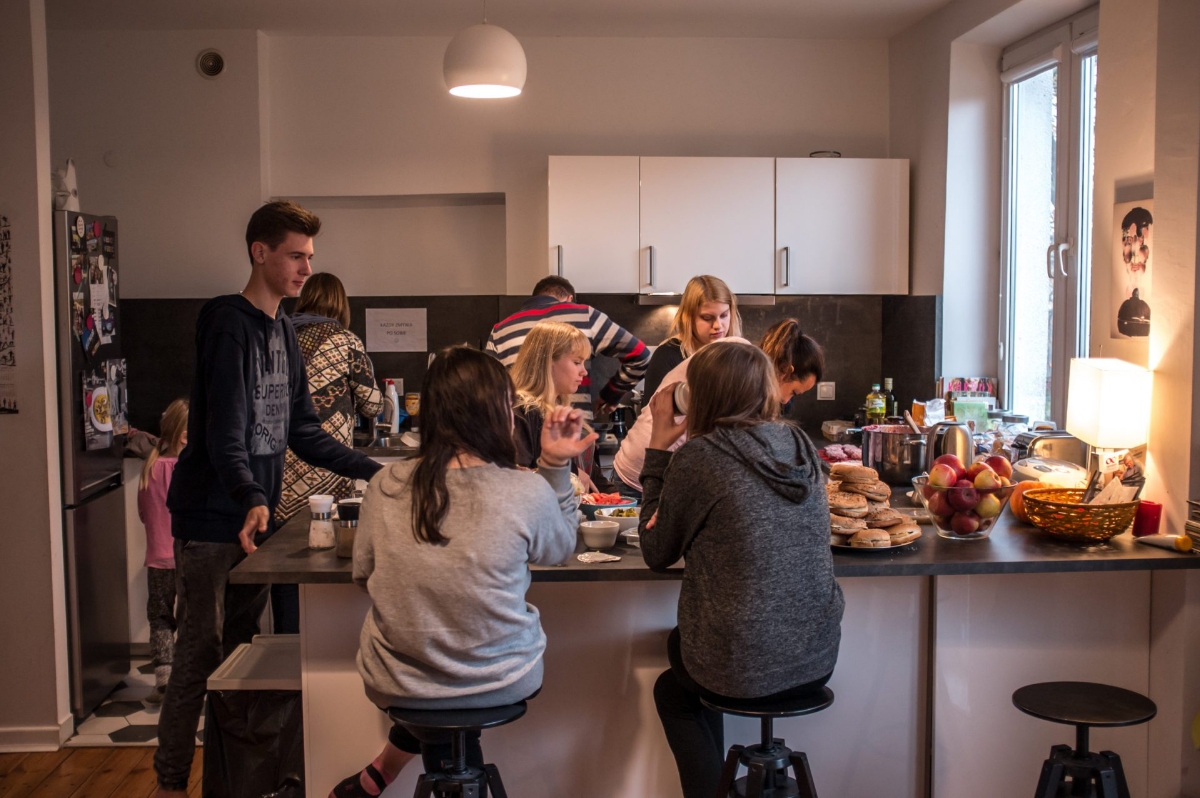
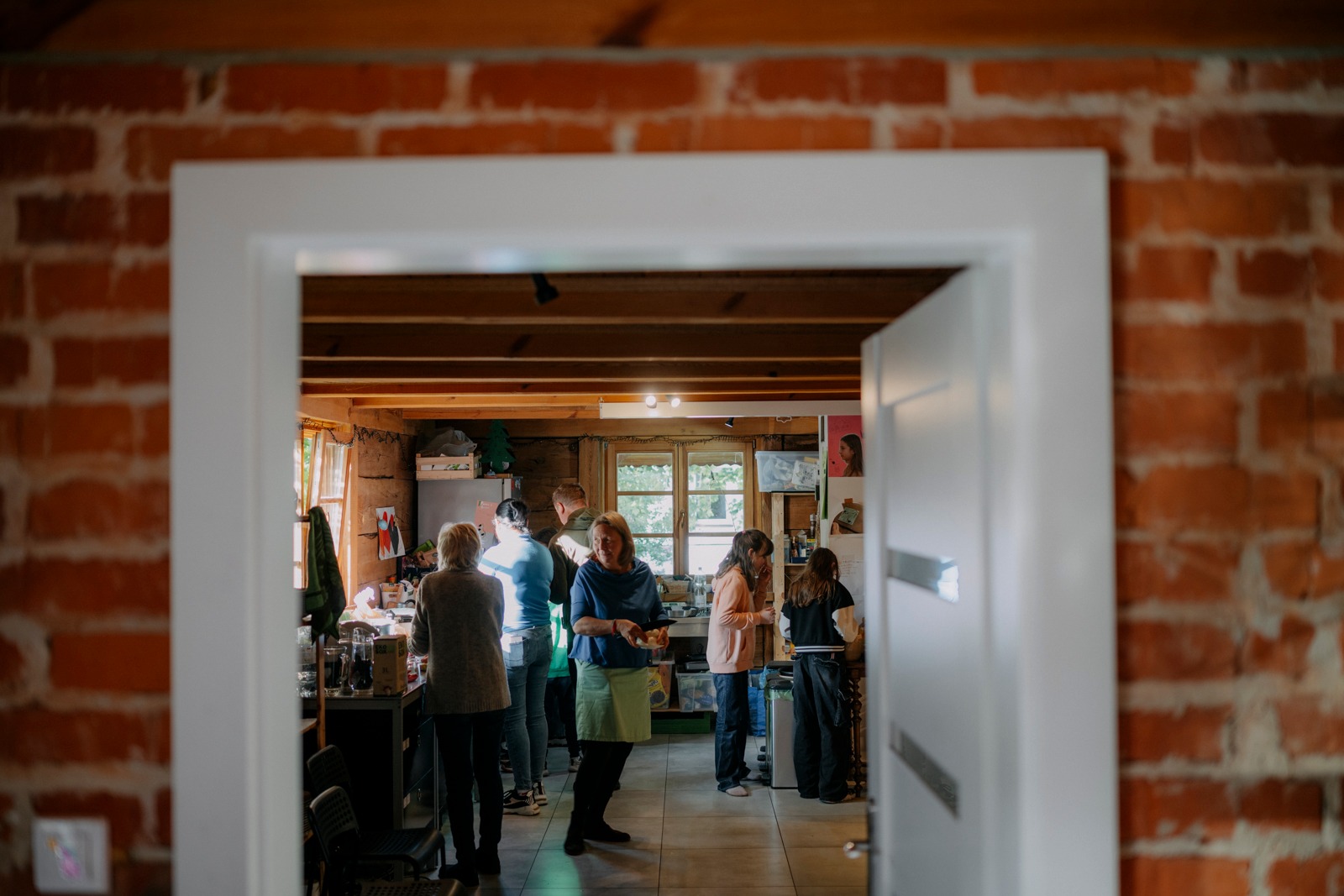
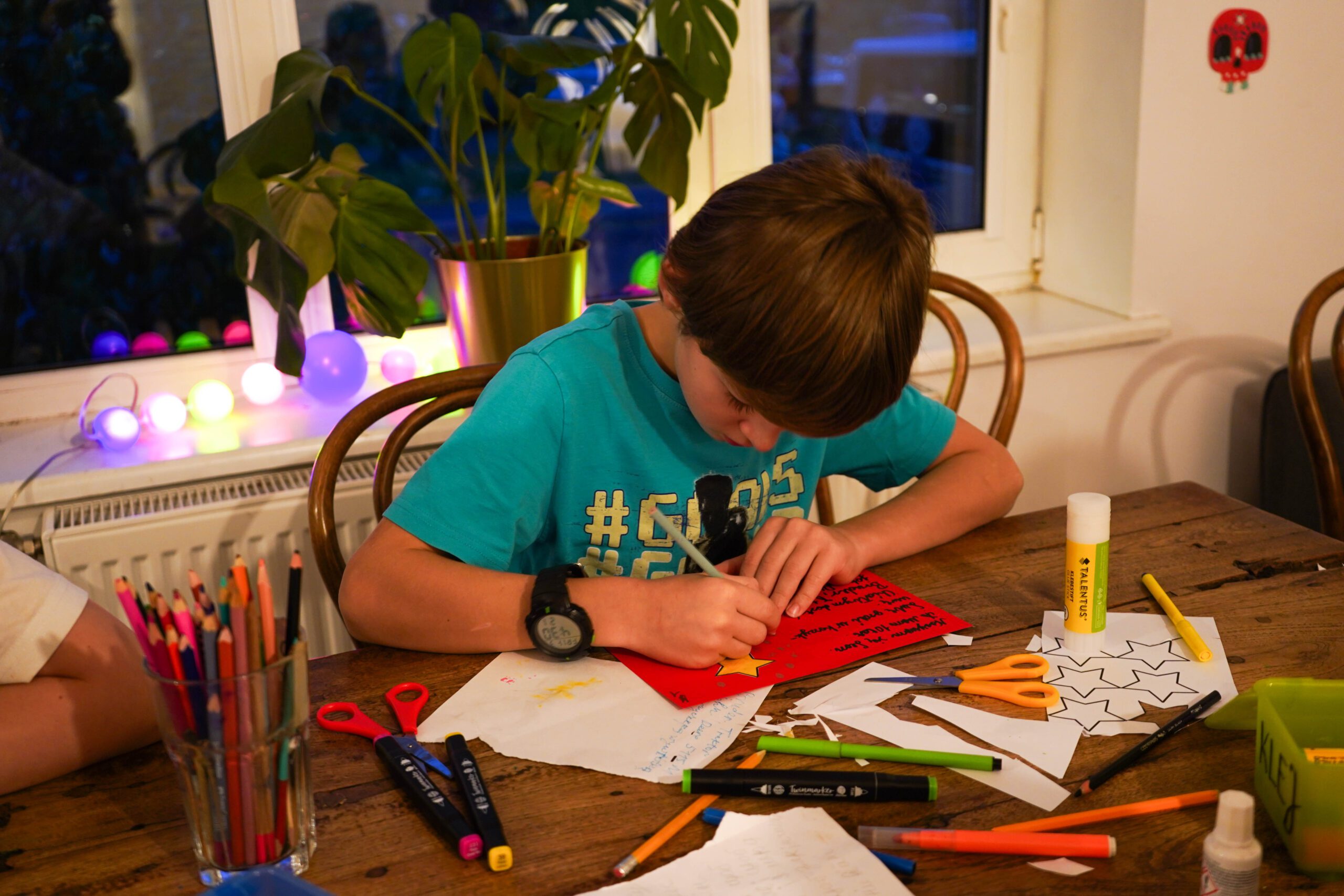
Our Homes are places where children regain a sense of safety. Each child stays with us for about 5–7 years. We build relationships and accompany children every day. Thanks to the work of our staff, educators, and volunteers, children:
- learn to trust and talk about their emotions,
- catch up on educational gaps,
- develop passions and discover talents,
- build self-confidence and social skills,
- have a safe space for spontaneous play.
Who do we work with every day?
Every day we support children and young people who:
- do not have conditions at home to rest and study,
- struggle with educational difficulties,
- do not believe in themselves or their abilities,
- know no ways of solving problems and conflicts other than aggression,
- need time, attention, and a safe relationship.
We are present where families need support:
- parents struggle with parenting challenges, addiction, or co-dependence,
- a parent’s chronic illness makes everyday family life difficult,
- the family is affected by intergenerational trauma,
- financial hardship limits a child’s opportunities for development,
- single-parent, low-income families need support.
Social Impact Assessment
Together with the Valores Foundation, we developed a research tool that monitors children’s development in four key areas: independence, self-acceptance, social skills, and broadening perspectives. Details HERE >
After just 6 months of work, we see real results:
- +14% in thinking about the future,
- +11% in self-esteem,
- +10% in social competencies,
- +9.5% in independence.
Meet the stories of our beneficiaries

Wojtek is 8 years old. He lives with his grandmother, who does her best but is increasingly running out of strength. The boy often leaves home without breakfast. One day he was so hungry that he stole a sandwich from a classmate at school. He felt ashamed, but hunger was stronger. Wojtek’s parents work abroad and visit rarely. His older brother brings Wojtek to the Foundation. Here, he can count on a warm meal. Sometimes he saves some food for later because he knows there might be no dinner at home.
Basia is almost 10 years old, but many things that are everyday realities for other children are missing from her life. The refrigerator in the small apartment where she lives is almost always empty – inside there is a piece of bread, some butter, dog food, and alcohol. Usually, in summer, children enjoy the taste of juicy fruit. Basia doesn’t even know their names. She has never had the chance to try cherries or apricots. There are no home-cooked meals or a shared family table in her home. At the Foundation Home, Basia can count on a warm meal, an afternoon snack, and healthy snacks and during the summer season, we make sure that fresh, seasonal fruits and vegetables are always on the table.
Mikołaj is 7 years old and came to Poland after fleeing the war in Ukraine, which destroyed his hometown. His father has passed away, and his mother left the country to work abroad. He lives with his grandmother and older brother. At school, Mikołaj feels isolated. The Foundation is the only place where he receives educational and emotional support. Here, he regains a sense of safety and hope for a better future.
Marta grew up in a home filled with alcohol, violence, and chaos. Already at the age of 13, she was forced to work at the expense of her schooling and her childhood. She witnessed violence against her mother and her beloved dog, living in constant tension and fear. The Foundation became the first safe place in her lifewhere she could experience stability and support, and begin to build a sense of self-worth.
Names and ages have been changed to protect the child’s privacy.
Did you know that a lack of support for children carries high social costs?
A lack of support at an early stage of a child’s life leads to high social costs:
- higher risk of addiction, crime, and unemployment,
- lower levels of education and social competencies,
- long-term mental and emotional problems,
- passing patterns of violence and neglect on to future generations,
- numerous risks for others.
Our Home is like a micro-community!

Each Foundation Home is more than just a place. It is a small community of people gathered around a child and their needs. With us, a child is not alone—they are supported by educators, psychologists, volunteers, and donors, united by one goal: to ensure a safe and good future for the child.
The Home lives through relationships. It heals what has been damaged, strengthens what is fragile, and step by step truly and lastingly changes children’s lives.

